







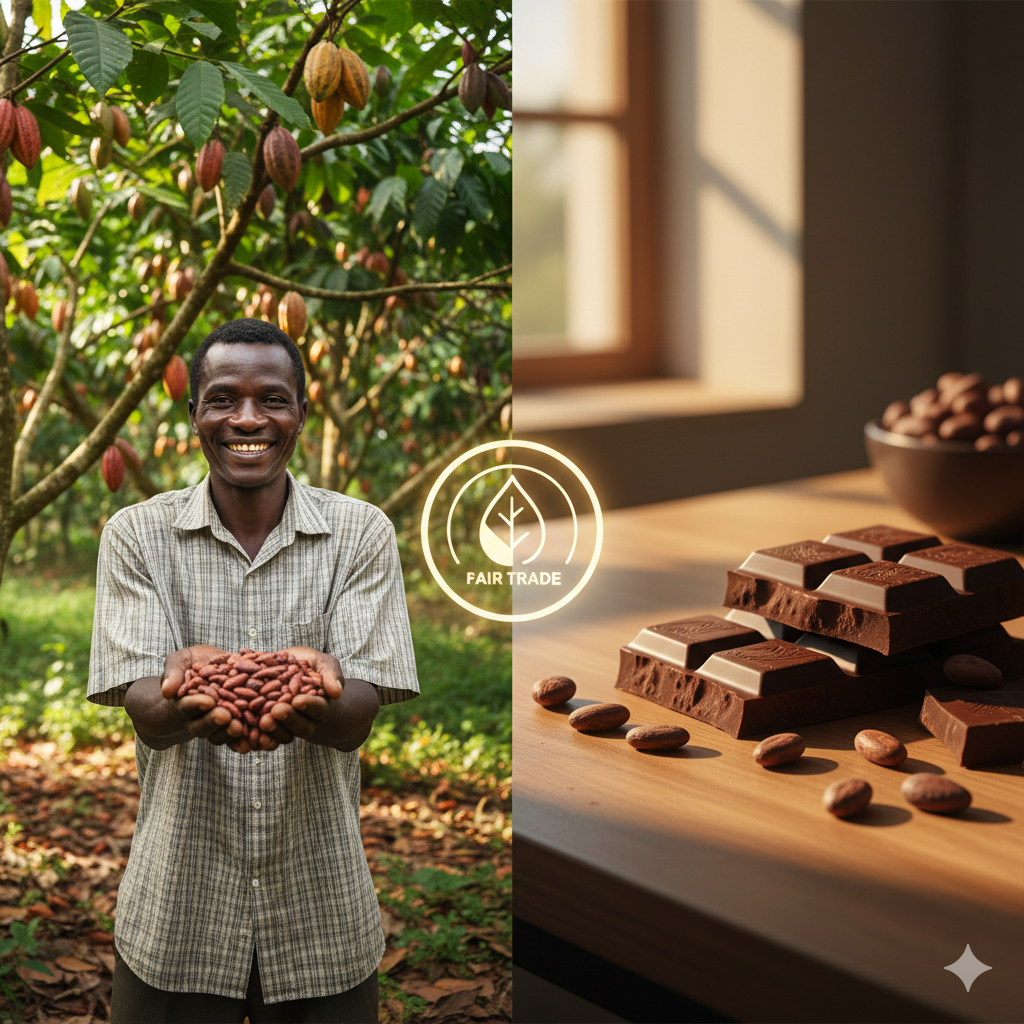
Understanding fair trade chocolate empowers consumers and chocolatiers to make ethical purchasing decisions supporting sustainable cacao farming communities worldwide. Fair trade chocolate represents more than premium confectionery; it embodies commitment to equitable farmer compensation, environmental stewardship, and transparent supply chains that benefit growers rather than exploiting them. This comprehensive guide explores fair trade certification standards, identifies which chocolate is fair trade, and reveals how ethical sourcing practices create superior products while fostering social justice throughout the global chocolate industry.
Understanding Fair Trade Chocolate Fundamentals
Fair trade chocolate operates within certification frameworks ensuring cacao farmers receive fair compensation while adhering to environmental and social standards that protect both people and ecosystems.
Core Fair Trade Principles
Fair trade chocolate from a certification perspective involves meeting specific criteria established by organizations like Fairtrade International, Fair Trade USA, and Rainforest Alliance. These standards mandate minimum price guarantees protecting farmers from market volatility, additional premiums funding community development projects, and prohibition of child labor throughout production chains.
The fundamental principle behind fair trade chocolate centers on direct relationships between chocolate manufacturers and cacao cooperatives. This model eliminates exploitative middlemen traditionally capturing majority profits while farmers receive minimal compensation. Fair trade premiums typically add $200-400 per metric ton above market price, creating sustainable income enabling farmers to invest in farm improvements, education, and healthcare.
Environmental sustainability forms an integral component of fair trade chocolate certification. Standards prohibit harmful pesticides, require forest conservation, and encourage biodiversity protection on cacao farms. These practices not only benefit ecosystems but produce higher quality cacao beans reflecting terroir characteristics valued by premium chocolate makers.
Fair Trade vs. Direct Trade
Understanding which chocolate is fair trade requires distinguishing between certification models. Fair trade certification follows standardized third-party verification ensuring compliance with established criteria. Direct trade represents an alternative approach where chocolate makers establish direct relationships with specific farms, often exceeding fair trade minimums but lacking independent verification.
|
Model |
Verification |
Price Premium |
Relationship Structure |
Best For |
|
Fair Trade Certified |
Third-party audited |
Guaranteed minimum + premium |
Cooperative-based |
Transparency, standardization |
|
Direct Trade |
Self-reported |
Varies, often higher |
Direct farm relationships |
Quality focus, innovation |
|
Rainforest Alliance |
Third-party audited |
Market-based + incentives |
Farm certification |
Environmental emphasis |
|
Organic Fair Trade |
Dual certification |
Premium + organic bonus |
Cooperative organic farms |
Environmental & social |
Both models support ethical fair trade chocolate production, though certification provides consumer confidence through independent verification. Many premium chocolate makers combine approaches, maintaining fair trade certification while building direct relationships enabling quality collaboration and innovation.

The Global Cacao Supply Chain
Fair trade chocolate becomes clearer when examining conventional supply chains where farmers receive minimal compensation despite chocolate's substantial retail value.
Traditional Supply Chain Issues
Conventional cacao trade historically exploits farmers through price volatility and market manipulation. Cacao prices fluctuate dramatically based on speculation, weather, and political instability, creating unpredictable farmer income. When prices drop below production costs, farmers cannot invest in farm maintenance, leading to aging trees, declining yields, and poverty perpetuation.
Middleman-dominated systems compound these challenges. Multiple intermediaries between farmers and chocolate manufacturers each extract profit margins, leaving growers with approximately 6% of chocolate bar's retail price in conventional systems. This economic pressure drives child labor, deforestation for quick income, and farmer abandonment of cacao cultivation entirely.
Fair trade chocolate addresses these systemic problems through guaranteed minimum prices, direct payment to cooperatives, and long-term purchasing commitments. Quality cacao demonstrates the results achievable when farmers receive fair compensation enabling investment in post-harvest processing and fermentation techniques that develop complex flavor profiles.
Major Cacao Growing Regions
Understanding which chocolate is fair trade involves recognizing primary growing regions and their unique certification challenges. West Africa produces approximately 70% of global cacao, with Côte d'Ivoire and Ghana dominating production. Fair trade certification penetration remains limited in these regions despite significant need, though cooperative organizations gradually expand certification access.
Latin American producers demonstrate higher fair trade participation rates. Countries like Peru, Ecuador, and Dominican Republic host numerous certified cooperatives producing high-quality cacao. Peruvian Cocoa Beans exemplify Latin American commitment to sustainable cultivation and fair trade principles. Venezuelan fine cacao, including Carenero Superior varieties, represents pinnacle of quality-focused fair trade production.
Identifying Fair Trade Chocolate Products
Knowing which chocolate is fair trade requires understanding certification marks, label reading, and recognizing commitment levels from various chocolate brands.
Certification Labels and Standards
Multiple certification systems identify fair trade chocolate products, each with distinct criteria and verification processes. The Fairtrade International mark represents most recognized certification globally, requiring compliance with social, economic, and environmental standards. Products displaying this seal contain minimum 20% fair trade ingredients, with pure chocolate products requiring 100% fair trade cacao.
Fair Trade USA operates similar certification with slightly different requirements, including support for independent estates alongside cooperatives. Rainforest Alliance certification emphasizes environmental sustainability and worker welfare, though economic standards differ from traditional fair trade models. The UTZ certification (now merged with Rainforest Alliance) focused on traceability and professional farm management.
When selecting fair trade chocolate for professional applications, examine certification percentages and verify cacao sourcing transparency. Premium brands often exceed minimum requirements, sourcing 100% certified cacao even in products containing other ingredients like sugar or vanilla. Dark Chocolate 55% Venezuela demonstrates single-origin sourcing enabling direct farmer relationships and quality traceability.
Reading Chocolate Labels
Beyond certification marks, label information reveals which chocolate is fair trade through origin declarations, farmer cooperative names, and transparency about pricing structures. Terms like "single-origin," "estate," or "cooperative" suggest direct relationships though don't guarantee fair trade certification. Look for specific farm or cooperative names rather than vague "imported cacao" statements.
Percentage declarations indicate cacao content but don't confirm fair trade status. However, high-percentage dark chocolates (70%+) more frequently source from specialized cooperatives producing premium beans. Venezuelan Blend 55% Sticks provide convenient pre-portioned format for professional applications requiring consistent quality and ethical sourcing.
Brand Commitment Levels
Understanding fair trade chocolate involves recognizing varying brand commitment levels. Some companies maintain complete fair trade sourcing across all products, while others offer limited fair trade lines alongside conventional options. Research company policies, sustainability reports, and transparency initiatives revealing genuine commitment versus superficial marketing.
Bean-to-bar chocolate makers typically demonstrate strongest fair trade principles, often exceeding certification minimums through direct trade relationships. These artisans prioritize cacao quality and farmer relationships, frequently paying premiums substantially above fair trade minimums. Their transparency enables consumers to verify ethical sourcing claims through detailed origin information and farmer stories.
Benefits of Fair Trade Chocolate
Economic Impact on Farming Communities
Fair trade premiums fund community development projects transforming cacao-growing regions. Cooperatives invest premium income in schools, healthcare clinics, water systems, and agricultural training programs. These investments create multiplier effects; educated children pursue diverse economic opportunities while improved healthcare increases farmer productivity and quality of life.
Price stability through guaranteed minimums enables long-term planning impossible under volatile conventional markets. Farmers invest in farm improvements like shade tree planting, irrigation systems, and fermentation infrastructure knowing stable income justifies capital expenditure. This security transforms farming from subsistence survival to viable business generating pride and community stability.
Women's empowerment represents significant fair trade chocolate benefit often overlooked. Fair trade standards mandate gender equality in cooperative governance and premium distribution. Women's committees control portion of premium funds, investing in projects addressing female farmers' specific needs like childcare facilities and literacy programs.
Environmental Sustainability
Which chocolate is fair trade matters environmentally because certification prohibits harmful practices while encouraging sustainable agriculture. Standards ban most synthetic pesticides, require integrated pest management, and mandate buffer zones protecting waterways from agricultural runoff. These requirements protect biodiversity while producing cleaner cacao beans requiring less processing.
Forest conservation forms critical fair trade component. Certifications prohibit deforestation, encourage agroforestry systems integrating cacao with native species, and require carbon footprint reduction plans. These practices preserve critical habitat while improving cacao quality; shade-grown cacao develops more complex flavors than sun-grown alternatives while supporting pollinator populations essential for cacao production.
Climate resilience building prepares farmers for increasing weather volatility. Fair trade premiums fund agricultural training teaching techniques like mulching, composting, and drought-resistant variety selection. Gibraltar Criollo varieties represent heritage genetics increasingly valuable as climate change pressures modern hybrids.
Quality and Flavor Advantages
Fair trade chocolate frequently exhibits superior flavor profiles compared to conventional alternatives. Fair compensation enables farmers to prioritize quality over quantity, investing time in proper fermentation and drying that develop complex flavor characteristics. Sur del Lago fermented beans exemplify quality achievable when farmers control processing.
Single-origin fair trade chocolate showcases terroir expressions lost in bulk commodity cacao blends. Venezuelan fine cacao demonstrates fruity, nutty, or floral notes depending on region and genetics. Hacienda Victoria Cocoa Beans represent estate-level quality where individual farm characteristics shine through finished chocolate.
Professional chocolatiers increasingly demand traceable, high-quality cacao making which chocolate is fair trade critical sourcing decision. Natural Cocoa Liquor Wafers 100% from Peruvian fine cacao enable artisans to craft distinctive chocolate expressions impossible with commodity ingredients.

Fair Trade in Professional Chocolate Making
Understanding fair trade chocolate proves essential for professional chocolatiers, pastry chefs, and confectioners building ethical brands resonating with conscious consumers.
Sourcing Fair Trade Ingredients
Professional chocolate work requires reliable fair trade ingredient sources delivering consistent quality. Beyond finished chocolate, consider fair trade cacao products like Cocoa Butter 100% Venezuelan Fine Cacao for tempering adjustment and white chocolate production. Natural Fine Venezuelan Cocoa Powder provides intense flavor for ganaches, mousses, and baked applications.
Raw fermented beans like Rio Caribe Superior Origin enable bean-to-bar production controlling every aspect from roasting through refining. This approach maximizes transparency while offering ultimate quality control. Equipment from our machines collection processes raw beans into custom chocolate formulations showcasing specific origin characteristics.
Communicating Fair Trade Values
Chocolatiers using fair trade chocolate must communicate these values effectively to consumers justifying premium pricing. Share farmer stories, cooperative names, and specific community projects funded through premiums. Transparency builds trust while educating consumers about chocolate's true cost when farmers receive fair compensation.
Include certification marks prominently on packaging and marketing materials. Explain what which chocolate is fair trade means through label information, website content, and point-of-sale displays. Educational resources from master chocolatiers often address ethical sourcing alongside technical skills, reflecting industry-wide commitment to sustainability.
Balancing Cost and Values
Fair trade chocolate costs more than conventional alternatives, requiring careful pricing strategy balancing ethical commitment with business viability. Calculate true costs including premium ingredients, and present pricing transparently explaining value proposition. Consumers increasingly willing to pay premiums for ethical products when benefits are clearly communicated.
Consider offering tiered product lines with fair trade options alongside more accessible conventional products. This approach introduces consumers to quality differences while accommodating various price sensitivities. Many successful chocolatiers gradually transition to 100% fair trade sourcing as brand recognition and customer loyalty develop supporting premium positioning.
Beyond Fair Trade: Additional Ethical Considerations
Understanding fair trade chocolate completely requires examining complementary certifications and practices extending beyond traditional fair trade standards.
Organic and Fair Trade Combinations
Organic certification combined with fair trade represents highest ethical standard currently available. Dutched Alkalized Cacao Powder demonstrates products meeting multiple certification criteria. Organic standards prohibit synthetic inputs while requiring ecological farming practices, and when combined with fair trade economic guarantees, create comprehensive sustainability model.
Dual certification costs more but appeals to health-conscious and environmentally aware consumers. Professional applications benefit from organic ingredients' purity and reduced pesticide residues affecting chocolate flavor. The investment in dual-certified ingredients signals serious commitment to comprehensive sustainability rather than selective ethical positioning.
Slavery and Child Labor Prevention
Which chocolate is fair trade matters critically regarding forced and child labor elimination. Despite industry pledges, conventional cacao supply chains continue exploiting vulnerable populations. Fair trade certification includes robust child labor monitoring and remediation programs addressing root causes through education access and family income improvement.
Look beyond certification to company-specific initiatives combating exploitation. Leading chocolate companies publish slavery risk assessments, fund independent audits, and maintain direct relationships enabling rapid intervention when violations occur. Supporting brands demonstrating proactive monitoring contributes to industry-wide improvements benefiting all farming communities.
Indigenous Rights and Land Preservation
Advanced ethical chocolate sourcing considers indigenous communities' rights where cacao traditionally grows. Some fair trade cooperatives operate in indigenous territories where land rights recognition and cultural preservation prove essential. Supporting these cooperatives protects traditional knowledge while maintaining genetic diversity increasingly valuable as climate change pressures modern varieties.
The traditional cacao varieties preserved by indigenous communities represent irreplaceable genetic resources. Fair trade premiums enable communities to resist agricultural intensification pressures that would eliminate these heritage trees in favor of higher-yielding modern hybrids lacking traditional varieties' climate resilience and flavor complexity.
Challenges Facing Fair Trade Chocolate
Fair trade chocolate systems face ongoing challenges requiring consumer awareness and continued improvement efforts across certification organizations and chocolate industry.
Certification Cost Barriers
Small-scale farmers often cannot afford certification costs despite meeting fair trade standards in practice. Certification fees, annual audits, and administrative requirements create barriers preventing smallest producers from accessing fair trade markets. Some organizations address this through group certifications covering multiple small farms, though gaps remain.
This reality means some ethically produced chocolate lacks certification despite fair farmer treatment. Direct trade relationships between artisan chocolate makers and specific farms sometimes provide better farmer compensation than fair trade minimums without certification costs. Understanding fair trade chocolate includes recognizing that certification absence doesn't automatically indicate exploitation.
Market Access and Price Premiums
Fair trade certification guarantees minimum price but doesn't guarantee buyers. Cooperatives must compete for chocolate maker attention, requiring quality consistency and relationship building. Market oversupply of certified cacao sometimes reduces premiums below maximum potential, particularly for standard quality beans rather than specialty fine cacao.
Geographic disadvantages affect some regions more than others. Remote cooperatives face higher transportation costs reducing net compensation despite fair trade premiums. Infrastructure investments funded by premiums help address logistics challenges, though remote communities remain disadvantaged compared to accessible regions.
Greenwashing and False Claims
Consumer confusion about which chocolate is fair trade stems partly from misleading marketing by conventional brands. Terms like "ethically sourced," "sustainably grown," or "farmer-friendly" lack standardized definitions and may indicate minimal practices rather than comprehensive fair trade standards. Seek specific certification marks rather than vague ethical claims.
Some companies create proprietary certification programs with lower standards than established fair trade systems. While potentially beneficial, these programs lack independent verification and may serve marketing purposes rather than representing genuine farmer support. Research program details verifying transparency and third-party auditing before trusting proprietary certifications.
Making Fair Trade Chocolate Choices
Practical guidance helps consumers and professionals navigate fair trade chocolate decision-making when purchasing ingredients or finished products.
For Home Bakers and Consumers
When shopping for fair trade chocolate, prioritize products with recognized certification marks like Fairtrade International, Fair Trade USA, or Rainforest Alliance. Read labels carefully noting cacao origin and percentage claims. Higher cacao content generally correlates with premium sourcing though doesn't guarantee fair trade status.
Support brands demonstrating transparency through origin information, farmer cooperative names, and sustainability reporting. Company websites often detail sourcing practices, premium payments, and community projects funded through fair trade programs. This transparency indicates genuine commitment rather than superficial marketing.
For Professional Chocolatiers
Professional chocolate makers require consistent quality alongside ethical sourcing. Establish relationships with suppliers providing detailed origin information and direct cooperative contacts. Our fine chocolate collection demonstrates quality and traceability essential for professional applications requiring reliable performance.
Consider equipment investments enabling bean-to-bar production from raw fair trade beans. Professional grinders accommodate small-batch artisan production while scaling for growing operations. Processing raw beans maximizes transparency while offering creative control over roasting profiles, conching time, and sugar ratios.
Building Sustainable Supply Chains
Professional operations committed to which chocolate is fair trade should develop long-term relationships with specific cooperatives rather than opportunistic purchasing based solely on price. Consistency enables cooperatives to plan investments while chocolatiers benefit from stable quality and supply. Some operations participate in pre-harvest financing providing cooperatives capital for immediate needs while guaranteeing future supply.
Visit cacao farms and cooperatives when possible. Direct observation builds understanding of farming challenges while demonstrating commitment to partnership rather than transactional commodity purchasing. These relationships inspire creativity; farmers share traditional processing methods while chocolatiers explain quality preferences enabling collaborative improvement.
The Future of Fair Trade Chocolate
Technology and Traceability
Blockchain and digital platforms increasingly track cacao from farm to finished chocolate, creating unprecedented transparency. These systems verify fair trade compliance while enabling consumers to trace specific chocolate bars to originating farms. Technology reduces certification costs through automated record-keeping while preventing fraud through immutable transaction records.
Direct payment platforms enable chocolate makers to transfer premiums directly to farmers' mobile accounts, eliminating cooperative administration that sometimes delays premium distribution. These innovations empower individual farmers while maintaining cooperative benefits of collective negotiation and resource pooling.
Climate Change Adaptation
Fair trade chocolate's future depends on helping farmers adapt to climate change threatening cacao cultivation in traditional regions. Premiums fund research into drought-resistant varieties, shade tree integration, and water management systems maintaining productivity despite weather volatility. The specialized cacao genetics preserved through fair trade systems provide breeding resources for climate-adapted future varieties.
Some cooperatives explore geographic diversification, establishing cacao cultivation in previously unsuitable regions becoming viable as climate shifts. Fair trade support enables investment in these experimental plantings while maintaining traditional cultivation during transition periods.
Consumer Education and Demand
Growing consumer awareness drives demand for fair trade chocolate across all market segments. Millennials and Gen Z consumers particularly value ethical sourcing, willing to pay premiums for verified sustainability. This demographic shift encourages conventional chocolate companies to expand fair trade offerings rather than limiting to niche premium lines.
Educational initiatives from certification organizations, chocolate makers, and advocacy groups continue building public understanding of which chocolate is fair trade and why it matters. Professional educational resources increasingly integrate ethical sourcing alongside technical skills, training next-generation chocolatiers in comprehensive sustainability rather than treating it as optional consideration. Learn more in our article on sourcing high-quality ingredients for your chocolate business.
Conclusion
Understanding fair trade chocolate and identifying which chocolate is fair trade empowers informed purchasing decisions that benefit cacao farming communities while delivering superior quality products. Fair trade certification ensures farmers receive equitable compensation, communities access development resources, and environments remain protected through sustainable cultivation practices. Whether selecting ingredients for professional chocolate making, purchasing gifts, or building ethical business foundations, fair trade chocolate represents commitment to social justice and environmental stewardship without compromising flavor or performance. Explore ethically sourced raw cacao beans, premium fine chocolate, and professional equipment at Zucchero Canada to support sustainable chocolate industry while crafting exceptional confections reflecting both technical excellence and moral integrity.
References
Fairtrade International. (2024). Fairtrade standard for cacao. https://www.fairtrade.net/standard/cocoa
Fountain, A. C., & Huetz-Adams, F. (2023). Cocoa barometer 2023: Sustainable cocoa—A shared responsibility. Voice Network.
International Cocoa Organization. (2024). The world cocoa economy: Past and present. ICCO Quarterly Bulletin of Cocoa Statistics.
Rainforest Alliance. (2024). Sustainable agriculture standard: Cocoa addendum. https://www.rainforest-alliance.org
Vagneron, I., & Roquigny, S. (2023). Value distribution and price formation on the world cocoa market: Analysis and policy recommendations. Basic-FDCL-Inkota.














Leave a comment
All comments are moderated before being published.
This site is protected by hCaptcha and the hCaptcha Privacy Policy and Terms of Service apply.