


Gel food colouring has become the preferred choice for professional bakers and serious home decorators, yet many wonder what is gel food colouring and why it differs from traditional liquid drops. This concentrated, paste-like coloring offers superior intensity, precise control, and professional results without affecting recipe consistency—advantages that explain its dominance in bakeries and pastry shops worldwide. Understanding gel food coloring's composition, benefits, and proper applications helps you achieve vibrant colors and bakery-quality results in every baking and decorating project.
Understanding Gel Food Colouring Composition
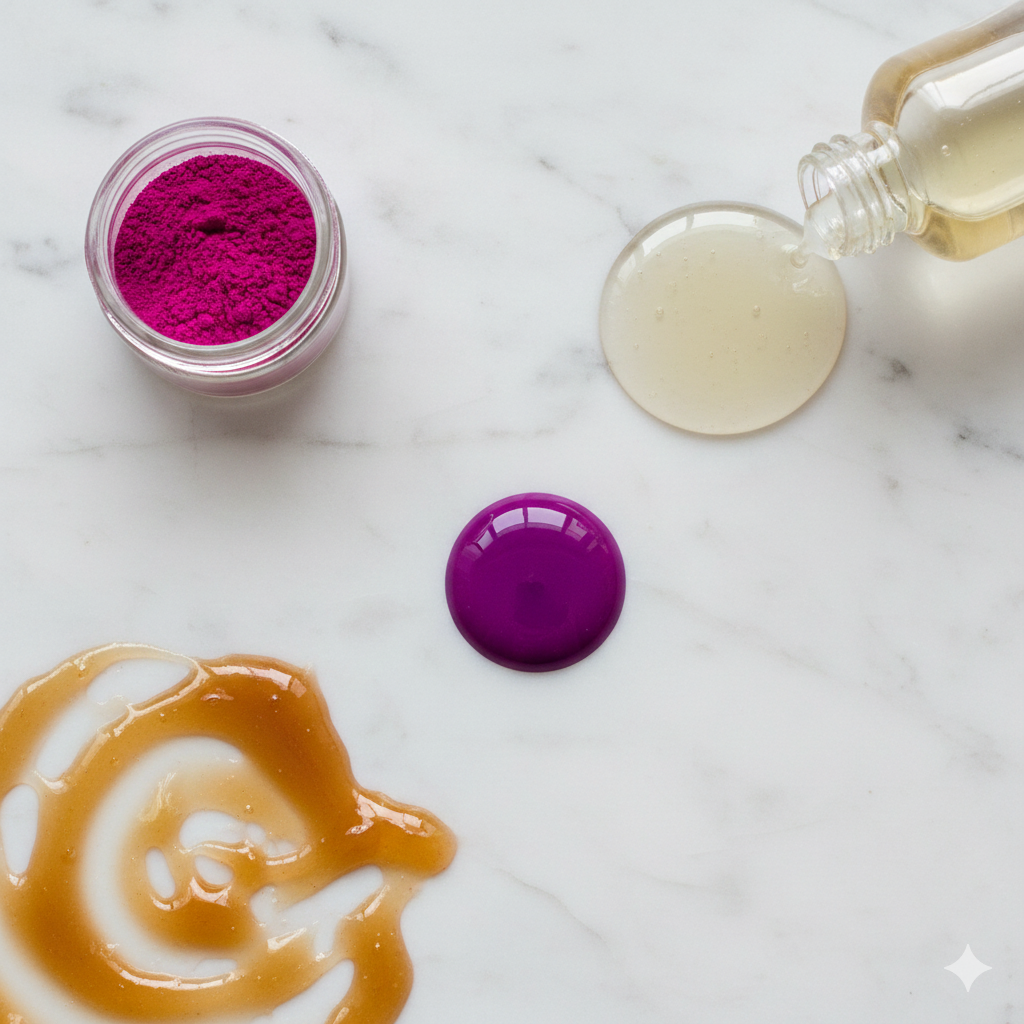
What is gel food colouring at its chemical foundation? Gel food colouring consists of concentrated color pigments suspended in a thick, gel-like base that maintains stability while delivering intense color.
Primary Components:
|
Ingredient |
Purpose |
Percentage Range |
|
Color pigments (synthetic or natural) |
Provides actual color |
10-30% |
|
Glycerin |
Creates gel consistency, prevents drying |
30-50% |
|
Corn syrup or sugar |
Adds viscosity, preserves moisture |
20-40% |
|
Water |
Solvent and carrier |
10-20% |
|
Preservatives (sodium benzoate) |
Extends shelf life |
<1% |
Consistency Explained: The thick, paste-like texture comes from the glycerin and corn syrup base, which creates a concentrated formula that won't separate or settle like liquid colors. This viscosity allows precise dosing—you control exactly how much color enters your recipe with toothpick accuracy.
Why Concentration Matters: Gel food colouring contains significantly higher pigment concentration than liquid alternatives—often 3-5 times more intense. This means achieving vibrant colors requires far less product, which prevents altering recipe moisture content or consistency.
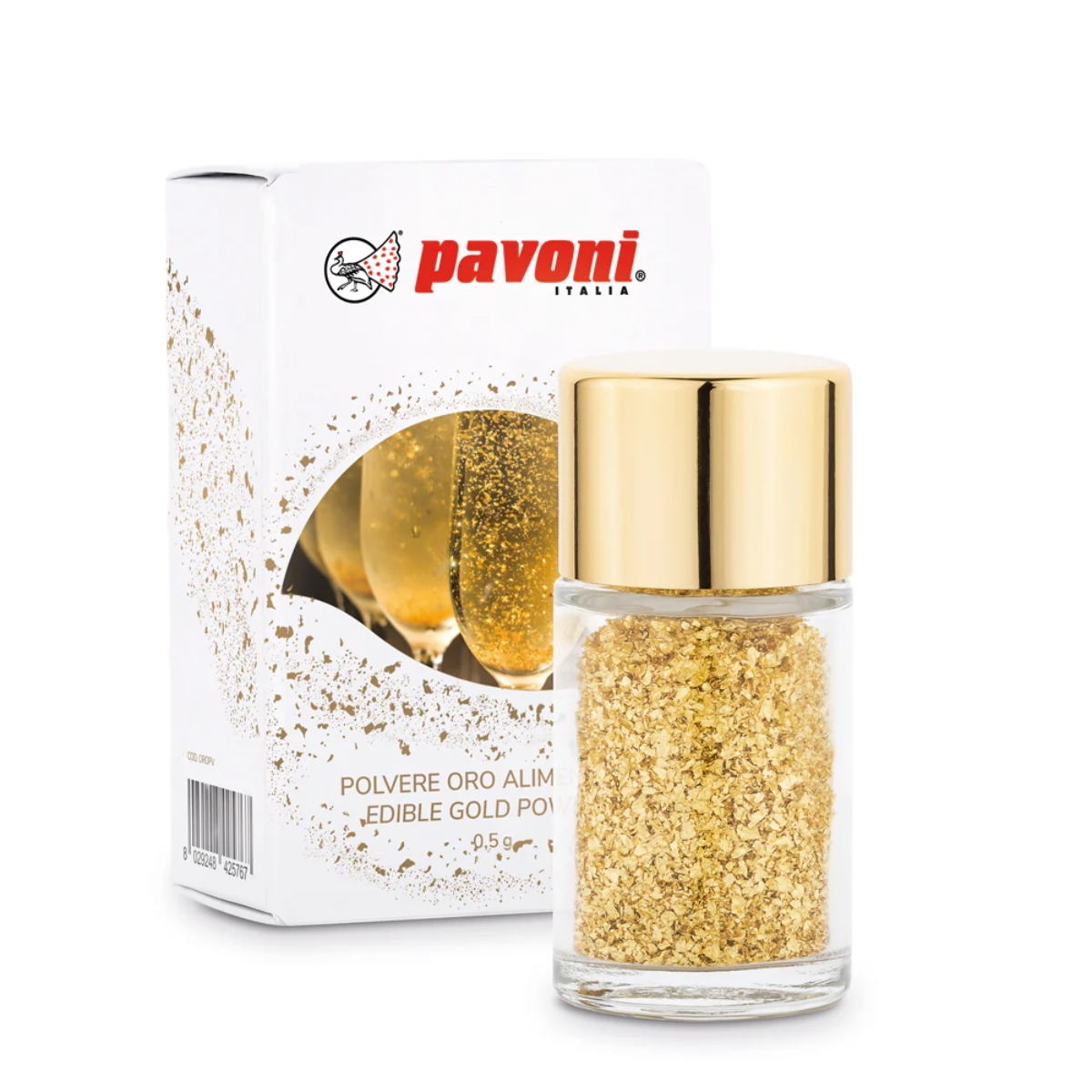
Professional food coloring options like Pavoni Italia maintain strict quality standards for pigment concentration and consistency.

Gel vs. Liquid vs. Powder Food Coloring
Understanding differences between coloring types answers what is gel food colouring in practical context compared to alternatives.
|
Feature |
Gel Food Coloring |
Liquid Food Coloring |
Powder Food Coloring |
|
Consistency |
Thick paste |
Thin liquid |
Fine powder |
|
Concentration |
Very high (3-5x liquid) |
Low, diluted |
Highest (must mix first) |
|
Amount needed |
Tiny (toothpick tip) |
Multiple drops (10-20+) |
Very tiny (pinch) |
|
Recipe impact |
Minimal—no moisture added |
Can thin batters/frostings |
None when mixed properly |
|
Color intensity |
Very vibrant |
Moderate |
Extremely vibrant |
|
Ease of use |
Easy, precise control |
Easy but less precise |
Requires mixing step |
|
Shelf life |
2-3 years |
1-2 years |
3-5 years |
|
Best for |
Frostings, fondant, batters |
Beverages, light tinting |
Professional work, bulk |
|
Cost per use |
Low (highly concentrated) |
Higher (need more product) |
Lowest (bulk professional) |
|
Professional preference |
Most popular choice |
Rarely used professionally |
Commercial/competition use |
When to Use Each:
- Gel: Most baking and decorating applications requiring vibrant, controlled color
- Liquid: Beverages, egg dyes, craft projects, or very light pastel tinting
- Powder: Professional bakeries, competition work, or when ordering bulk supplies
Explore powdered colors for professional-grade alternatives to gel formulations.
Benefits of Gel Food Colouring
Highly Concentrated Formula: The primary advantage explaining what is gel food colouring's professional dominance is extreme concentration. Achieving deep, vibrant color requires mere toothpick amounts rather than dozens of liquid drops. This concentration prevents over-saturating recipes with unnecessary liquid that could compromise texture.
Doesn't Affect Recipe Consistency: Unlike liquid colors that add moisture potentially thinning frostings or affecting batter ratios, gel food colouring adds negligible liquid. Your buttercream maintains perfect piping consistency, and cake batters stay properly balanced regardless of color intensity.
Wide Color Range: Professional gel lines offer 40-60+ colors including standard primaries, complex custom shades, and specialty metallics or neons impossible to achieve mixing basic colors. This variety eliminates guesswork in color matching.
Long Shelf Life: Properly stored gel colors last 2-3 years without fading or separating. The glycerin base prevents drying out, and preservatives inhibit mold or bacterial growth. This longevity makes them economical for infrequent bakers.
Easy Dosage Control: The thick consistency allows precise application using toothpicks—add tiny amounts, assess, add more if needed. This control prevents the common liquid color problem of accidentally adding too many drops and over-coloring beyond repair.
Professional-Quality Results: Gel food colouring produces the vibrant, even colors seen in bakery displays and competition cakes. The intensity and stability ensure colors photograph beautifully and maintain vibrancy throughout events.
Cost-Effective: While gel colors cost more upfront than liquid drops, the concentration means each jar lasts significantly longer. Cost per use is actually lower than liquid alternatives.
Types of Gel Food Colouring
Water-Based Gel Colors
Most gel food colouring uses water-based formulation suitable for standard baking and decorating applications.
Composition: Color pigments suspended in glycerin, corn syrup, and water base. This formula mixes seamlessly into anything containing moisture—frostings, batters, fondant, royal icing.
Best Applications:
- Buttercream and cream cheese frostings
- Fondant and gum paste
- Royal icing
- Cake batters and cookie doughs
- Macarons shells
- Meringues and whipped cream
Limitations: Cannot be used in pure fat-based applications like chocolate or candy melts. Water content causes chocolate to seize (become grainy and unusable). Must use oil-based alternatives for these applications.
Oil-Based Gel Colors
Specialized oil-based gels serve applications where water causes problems—primarily chocolate and candy work.
Composition: Color pigments suspended in oil or cocoa butter base instead of water. This fat-soluble formula mixes into chocolate, candy melts, and other oil-based mediums without causing seizing.
Critical Applications:
- Coloring chocolate (dark, milk, white)
- Candy melts and coating chocolate
- Cocoa butter painting
- Oil-based cake releases
Why Oil-Based Required: When water contacts chocolate or candy melts, it causes immediate seizing—the smooth melted mixture transforms into thick, grainy, unusable paste. Oil-based colors eliminate this risk entirely.
|
Type |
Base |
Best For |
Cannot Use For |
|
Water-based |
Glycerin, corn syrup, water |
Frostings, batters, fondant |
Chocolate, candy melts |
|
Oil-based |
Oils, cocoa butter |
Chocolate, candy coating |
Water-based recipes (may separate) |
Professional colors for chocolate ensure proper oil-based formulation for chocolate applications.

How to Use Gel Food Colouring
Proper technique maximizes gel food colouring effectiveness when understanding what is gel food colouring practically.
Application Method
Basic Technique:
- Use clean toothpick or small spatula to extract tiny amount from jar
- Add gel to small portion of recipe (1/4 cup frosting, for example)
- Mix thoroughly until color distributes evenly—no streaks
- Assess color intensity when fully incorporated
- Add more gel gradually if deeper color desired
- Once satisfied with small batch, mix into full recipe
Why This Two-Step Matters: Adding color directly to full batch risks over-coloring with no way to lighten except discarding and starting fresh. Testing in small portions allows perfecting shade before commitment.
Starting Amounts:
|
Recipe Type |
Initial Amount |
Expected Result |
|
Buttercream (1 cup) |
Toothpick tip |
Pastel tint |
|
Fondant (1 lb) |
Rice grain size |
Light color |
|
Cake batter (standard recipe) |
1/8 teaspoon |
Medium color |
|
Royal icing (1 cup) |
Toothpick tip |
Light-medium |
|
Macaron batter (1 batch) |
1/8 teaspoon |
Vibrant color |
Achieving Different Intensities:
- Pastel: Single toothpick tip per cup
- Medium: 1/8 teaspoon or 2-3 toothpick dabs per cup
- Vibrant: 1/4 teaspoon or more per cup
- Deep/Bold: Up to 1/2 teaspoon per cup for maximum intensity
Color Mixing: Create custom shades by mixing gels together before adding to recipe. Start with primary colors (red, blue, yellow) and mix to achieve any color imaginable. Keep notes on successful ratios for future consistency.
Testing: Always test color in small amount and allow it to "develop" for 5-10 minutes. Colors often intensify slightly after initial mixing, and baked goods may darken during cooking.
Best Applications for Gel Food Colouring
|
Application |
Why Gel Works Best |
Amount Needed |
Tips |
|
Buttercream frosting |
Doesn't thin consistency |
Toothpick tip to 1/4 tsp |
Add to room temp frosting |
|
Fondant/gum paste |
Maintains workability |
Knead in gradually |
Wear gloves to prevent staining |
|
Royal icing |
Preserves proper consistency |
Start minimal |
Color intensifies as it dries |
|
Cake batters |
Even distribution, vibrant result |
1/8-1/4 tsp per recipe |
Mix thoroughly, no streaks |
|
Macarons |
No excess moisture affecting texture |
1/8 tsp for vibrant shells |
Add to almond flour mixture |
|
Cookie dough |
Creates vibrant cookies |
1/4 tsp per batch |
Colors may lighten when baked |
|
Cream cheese frosting |
Doesn't separate frosting |
Minimal—test first |
Gel acidity can affect cream cheese |
|
Whipped cream |
Stabilizes better than liquid |
Very minimal |
Add to stabilized whipped cream only |
What to Avoid: Never use water-based gel in chocolate, candy melts, or pure cocoa butter. Always use oil-based colors for chocolate for these applications to prevent seizing.
Professional Pavoni Italia Gel Colors
For bakers and decorators seeking superior results, Pavoni Italia offers comprehensive professional gel food colouring range that sets industry standards. Their Italian-crafted gels deliver exceptional intensity, requiring even less product than standard professional brands while maintaining perfect consistency.
Pavoni Gel Advantages:
- Superior pigment concentration: 20-30% higher than standard gels
- Extensive color palette: 50+ shades including rare specialty colors
- Italian quality control: Consistent batch-to-batch performance
- Professional formulation: Works flawlessly in all standard applications
- Long shelf stability: Maintains intensity for 3+ years
- Clean flavor profile: Zero taste impact even at high concentrations
Available exclusively through Zucchero Canada, Pavoni Italia gels bring European professional standards to Canadian bakers and decorators. Explore complete food coloring selection for every application need.
Professional Gel Food Colouring Brands
Industry Standards: Understanding what is gel food colouring at professional level means recognizing quality indicators that separate premium from budget options.
What Professionals Seek:
- High pigment concentration (20-30% minimum)
- Consistent color between batches
- Wide color range including specialty shades
- Clean ingredients without off-flavors
- Reliable shelf life and stability
- Trusted brand reputation
Quality Indicators:
- Gel maintains thick consistency without separation
- Color distributes evenly without clumping
- Minimal product achieves vibrant results
- No flavor or aroma detectable in finished products
- Packaging prevents contamination and drying
Where to Buy Professional Gels: Specialty baking suppliers, professional pastry shops, and online retailers cater to serious bakers. Zucchero Canada offers curated selection of premium brands including exclusive Pavoni Italia range, ensuring professional quality for Canadian decorators.
Budget vs. Premium: While supermarket gels work for casual baking, professional gels justify higher cost through superior concentration, broader color selection, and reliable consistency essential for commercial work or important celebrations. The investment pays dividends in results and longevity.
Complement gel colors with professional cake pastry decorations and pastry baking tools for complete professional setup.
Gel Food Colouring for Chocolate Work
Working with chocolate requires understanding what is gel food colouring formulation specifically designed for fat-based applications.
The Water Problem: Standard water-based gel food colouring causes chocolate to seize immediately upon contact. Even tiny water amounts trigger fat particles to clump, transforming smooth melted chocolate into thick, grainy, unusable paste. This reaction is permanent—seized chocolate cannot be rescued.
Oil-Based Requirement: Only oil-based or cocoa butter-based gel colors work safely in chocolate. These fat-soluble formulations mix seamlessly into chocolate's cocoa butter without moisture interference.
Pavoni Colors for Chocolate
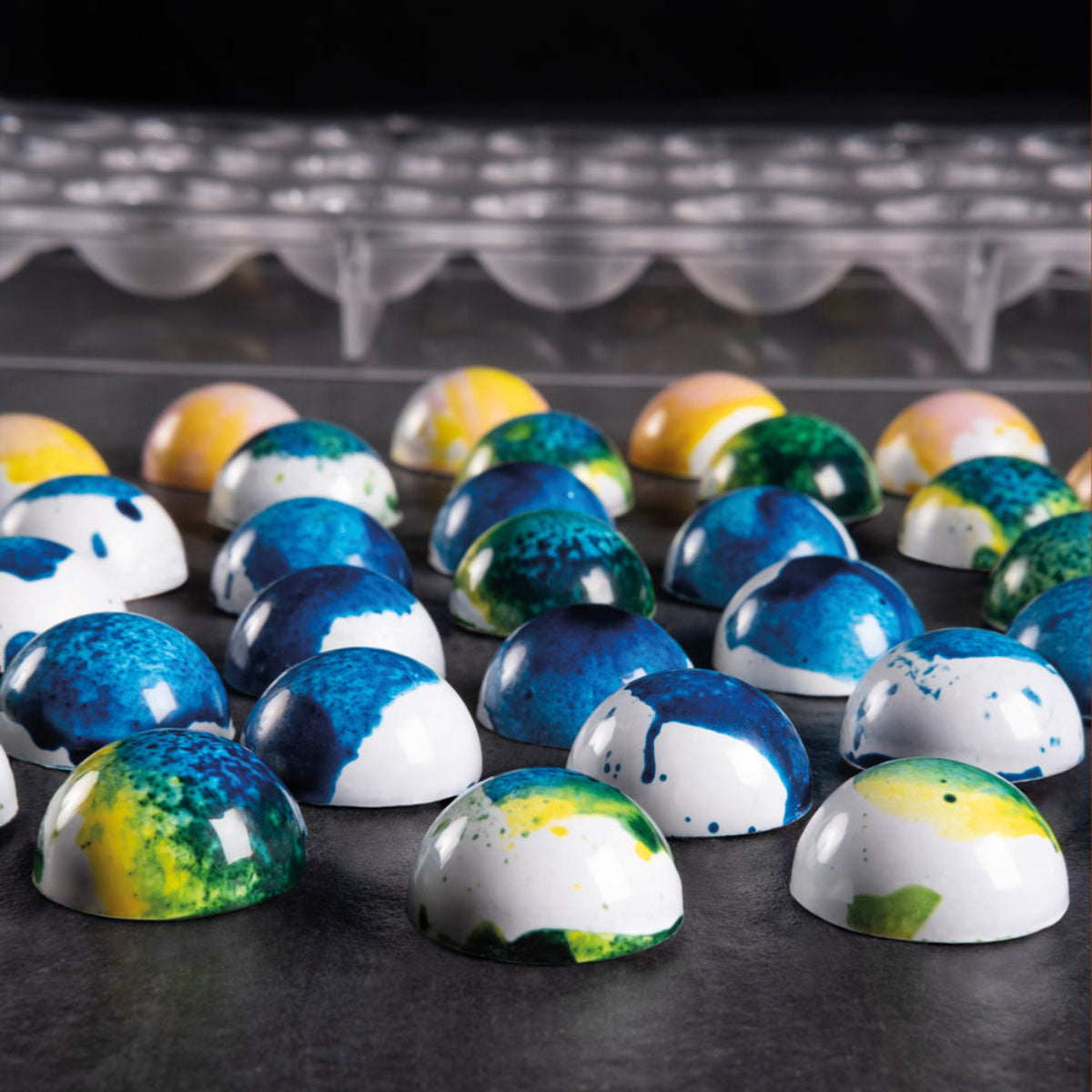
Pavoni Italia's specialized colors for chocolate represent the pinnacle of chocolate coloring technology. Their oil-based and cocoa butter-based formulations ensure flawless results in the most demanding chocolate applications.
Why Pavoni Excels for Chocolate:
- True oil-based formula: Zero water content eliminates seizing risk
- High concentration: Minimal product achieves vibrant color
- Heat stable: Maintains color through tempering temperatures
- No taste interference: Pure color without waxy or artificial notes
- Wide color range: Comprehensive palette for any design
- Professional reliability: Consistent results batch after batch
Proper Chocolate Coloring Technique:
- Melt chocolate to proper working temperature (88-90°F dark, 86-88°F milk, 82-84°F white)
- Add oil-based gel using toothpick—start with tiny amount
- Stir thoroughly for 30-60 seconds until color fully incorporated
- Assess intensity and add more if needed
- Use immediately or maintain at working temperature
Temperature Considerations: Add color after chocolate reaches working temperature but before it cools. Very hot chocolate may degrade some colors, while too-cool chocolate won't incorporate color evenly.
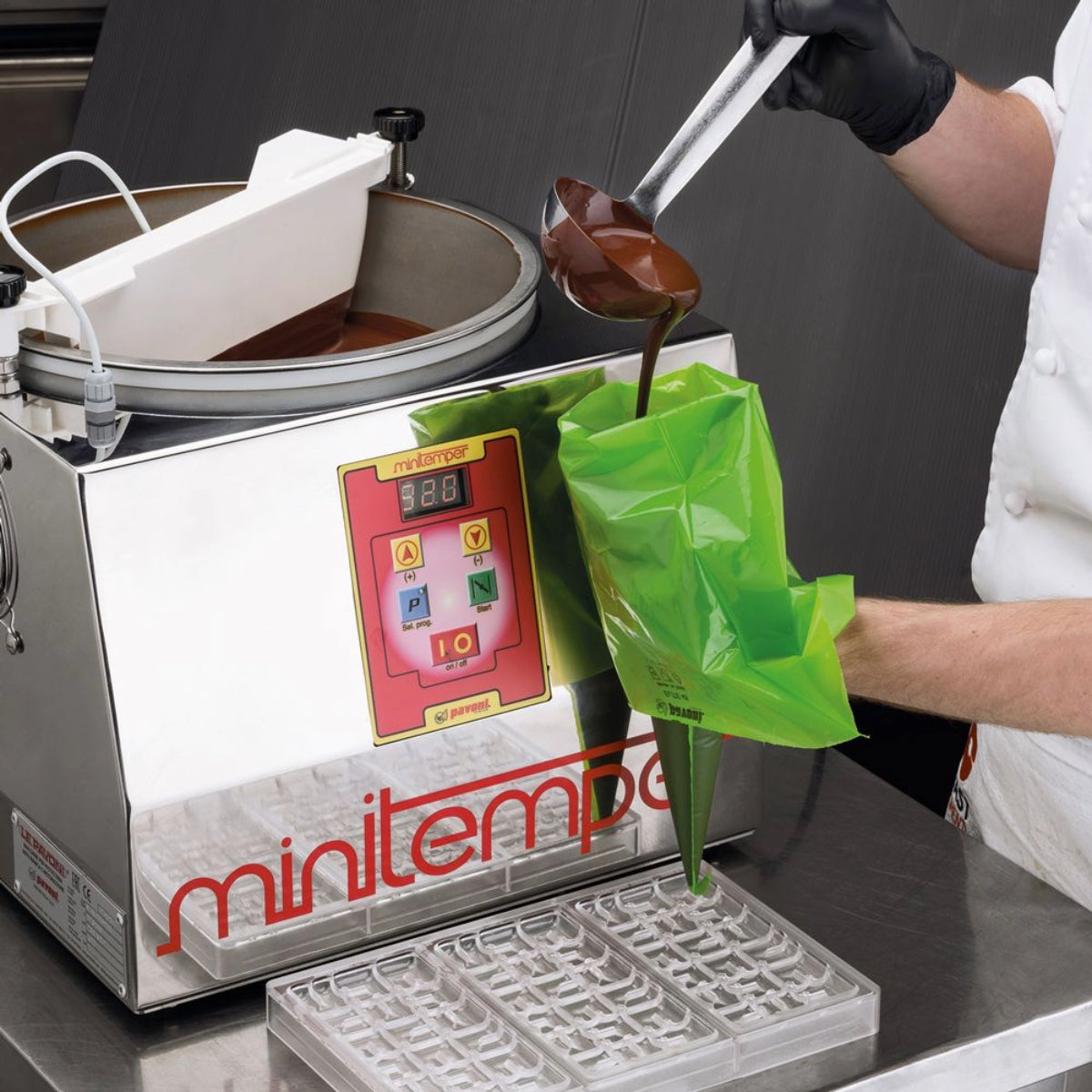
For optimal chocolate work, pair Pavoni colors with professional chocolate melters or mol dart chocolate melters that maintain precise temperatures.
Advanced Techniques with Gel Colors
Creating Custom Palettes: Mix primary gel colors (red, blue, yellow) to create any shade imaginable. Keep detailed notes on ratios for reproducible results. Professional decorators maintain personal color recipe books for signature shades.
Ombre and Gradient Effects: Divide frosting into portions. Leave one white, color others in gradually intensifying shades using increasing gel amounts. Apply lightest to darkest on cake for seamless ombre effect.
Marbling Techniques: Swirl two or more gel colors gently through frosting or fondant without fully incorporating. Creates organic, artistic patterns unique to each piece.
Color Theory Application: Understanding complementary colors (opposite on color wheel) and analogous colors (adjacent on wheel) helps create sophisticated, professional color schemes rather than random combinations.
Painting on Fondant/Cookies: Dilute gel with clear alcohol (vodka or lemon extract) to create paint consistency. Use soft brushes to hand-paint details on fondant cakes or sugar cookies for artistic, custom designs.
Professional Finishing with KREA Swiss Spray Guns
For the ultimate advanced technique, KREA Swiss airbrush spray guns elevate gel food colouring application to professional levels impossible with manual methods.
Advanced Effects with Spray Technology:
- Flawless gradients: Seamless color transitions manual methods can't achieve
- Velvet texture: That coveted velvety appearance on cakes and chocolates
- Precise detailing: Intricate designs and patterns with perfect edges
- Multi-color layering: Complex color combinations for galaxy, sunset, or ombre effects
- Professional speed: Color entire cakes in minutes vs. hours manually
KREA Swiss precision engineering ensures consistent pressure and atomization, critical when working with diluted gel food colouring for spray application. Their Swiss-quality construction delivers reliability professionals demand for commercial work.
Gel Preparation for Spraying: Dilute gel colors with clear alcohol or glycerin to airbrush-appropriate consistency (similar to skim milk). Strain through fine mesh to remove any particles that might clog spray gun.
Available exclusively at Zucchero Canada with complementary food color sprays and spray colors for complete professional spray systems.
Storage and Shelf Life
Proper Storage Conditions: Store gel food colouring in cool (60-70°F), dry place away from direct sunlight. Heat and light degrade pigments over time, reducing intensity and potentially altering colors. Keep jars tightly sealed when not in use to prevent drying.
Expected Longevity:
- Unopened gel colors: 3-5 years from manufacture date
- Opened gel colors: 2-3 years with proper storage
- Professional brands (Pavoni Italia): Often 3+ years due to superior preservatives
Signs of Degradation:
- Separation (liquid pooling on surface)
- Hardening or crusty texture
- Faded or altered color appearance
- Off smell or moldy growth
- Difficulty mixing or incorporating into recipes
Maintaining Quality: Always use clean, dry utensils when extracting gel from jars. Never double-dip—contamination introduces bacteria or moisture that shortens shelf life. If gel surface develops crust, remove and discard top layer before using remainder.
Freezing Not Recommended: Unlike some food products, gel colors don't benefit from freezing. Temperature fluctuations can cause separation or texture changes. Room temperature storage in original containers provides optimal preservation.

Common Mistakes to Avoid
|
Mistake |
Why It's Wrong |
Consequence |
Correct Approach |
|
Adding too much at once |
Can't remove excess color |
Overly dark, unusable batch |
Start with toothpick tip, add gradually |
|
Using in chocolate without oil-based formula |
Water causes seizing |
Ruined, grainy chocolate |
Only use oil-based colors for chocolate |
|
Not mixing thoroughly |
Streaky, uneven color |
Unprofessional appearance |
Mix small portion first, then incorporate |
|
Storing improperly (heat/light) |
Degrades pigments |
Faded, inconsistent colors |
Cool, dark, sealed storage |
|
Using expired/old gels |
Weakened intensity, separation |
Dull colors, texture issues |
Check dates, replace old products |
|
Contaminating jar |
Introduces bacteria/moisture |
Shortened shelf life, spoilage |
Always use clean, dry utensils |
|
Wrong type for application |
Formula doesn't work |
Failed recipe, wasted ingredients |
Water-based for most; oil-based for chocolate |
Prevention: Read labels carefully before purchasing to ensure appropriate formula for intended use. Test new brands in small batches before important projects. Keep workspace organized to prevent cross-contamination between different gel types.
Tips for Professional Results
Start Conservative: Always begin with less color than you think needed. You can add more incrementally, but removing excess is impossible. This "less is more" approach prevents over-coloring disasters.
Use Toothpicks for Control: Dip clean toothpick into gel, wipe excess on jar rim, then transfer to recipe. This precise method delivers consistent, controlled amounts every time.
Mix Thoroughly: Ensure complete color distribution before assessing intensity. Streaky color looks unprofessional and indicates insufficient mixing.
Allow Development Time: Colors often intensify 5-10 minutes after initial mixing as they fully hydrate and incorporate. Wait before deciding to add more.
Keep Detailed Notes: Record successful color recipes with exact measurements (number of toothpick dabs or fraction of teaspoon). This documentation ensures consistent results in future projects.
Professional Concentration Benefits: Premium gels like Pavoni Italia require less product for same intensity, making them more economical long-term despite higher initial cost.
Enhance your professional toolkit with quality silicone molds for pastry chocolate, 3D seasonal chocolate molds, and chocolate decorations that showcase your colored creations beautifully.
Conclusion
Understanding what is gel food colouring—from its concentrated glycerin-based composition to its superior intensity and precision control—explains why professionals consistently choose gel over liquid or powder alternatives for most baking and decorating applications. The thick, paste-like consistency delivers vibrant colors without affecting recipe moisture balance, while extreme concentration makes gels economical despite higher upfront costs. For standard baking, water-based gels handle frostings, batters, and fondant flawlessly, while oil-based formulations solve chocolate coloring challenges liquid alternatives cannot address. Professional brands like Pavoni Italia elevate results beyond standard grocery store options through superior pigment concentration, extensive color ranges, and reliable consistency that serious bakers and decorators demand. Paired with advanced application tools like KREA Swiss spray guns, gel colors enable professional-quality results previously achievable only in commercial bakeries. Ready to experience superior color control and intensity? Explore Pavoni Italia food coloring, specialized colors for chocolate, powdered colors, professional spray colors, and KREA Swiss airbrush spray guns exclusively at Zucchero Canada—Canada's premier destination for professional pastry supplies, complete with chocolate melters, silicone molds, and comprehensive cake decorations for every professional need.
References
Figoni, P. (2022). How baking works: Exploring the fundamentals of baking science (4th ed.). Wiley.
Hartel, R. W., & von Elbe, J. H. (2023). Food color chemistry and applications. Springer International Publishing.
Suas, M. (2022). Advanced bread and pastry: A professional approach (2nd ed.). Cengage Learning.
Wrolstad, R. E., & Culver, C. A. (2022). Alternatives to artificial food colorants. Annual Review of Food Science and Technology, 13, 393-418.












Leave a comment
All comments are moderated before being published.
This site is protected by hCaptcha and the hCaptcha Privacy Policy and Terms of Service apply.