



Understanding how to make melted chocolate thinner transforms thick, unworkable chocolate into smooth, flowing consistency perfect for dipping, drizzling, and coating applications. Chocolate becomes too thick when overheated, when it contains insufficient cocoa butter, or when moisture causes seizing. This comprehensive guide examines proven thinning methods using various oils and fats, explores the science behind chocolate viscosity, provides specific ratios for different applications, and offers troubleshooting solutions for common chocolate consistency problems that interfere with professional-quality results.
Why Melted Chocolate Becomes Too Thick
Chocolate's viscosity depends on the balance between cocoa solids, cocoa butter, and any added ingredients. Understanding these factors helps you prevent thickness problems before they occur and correct issues when they arise during chocolate work.
Standard chocolate chips contain stabilizers that help them maintain shape during baking but create thick, paste-like consistency when melted. These baking chips require thinning for dipping or coating applications since their formulation prioritizes shape retention over fluidity. Professional couverture chocolate contains higher cocoa butter percentages that naturally create thinner, more workable melted chocolate without additions.
Temperature significantly impacts chocolate thickness. Chocolate that's too cool thickens as cocoa butter begins solidifying, while overheated chocolate develops grainy texture that appears thick despite being liquefied. Maintaining chocolate between eighty-eight and ninety-two degrees Fahrenheit for dark varieties or eighty-six to ninety degrees for milk chocolate ensures optimal fluidity.
Moisture is chocolate's enemy—even tiny water droplets cause seizing where chocolate transforms from smooth liquid into thick, grainy paste. This happens when wet utensils contact chocolate, when steam from double boilers enters the bowl, or when condensation forms on cold chocolate warming to room temperature. Seized chocolate requires different treatment than simply thick chocolate since the cocoa particles have clumped irreversibly.
Best Ingredients for Thinning Chocolate
Several fats effectively thin melted chocolate, each with advantages and considerations for different applications. Choosing appropriate thinning agent depends on your intended use, dietary restrictions, and desired final flavor profile.
Coconut Oil: Most Popular Option
Refined coconut oil represents the most popular chocolate-thinning agent due to its neutral flavor, smooth texture, and stability at room temperature. The oil integrates seamlessly into melted chocolate without affecting taste, making it ideal for applications where pure chocolate flavor matters. Use refined coconut oil rather than virgin varieties to avoid coconut flavor that competes with chocolate.
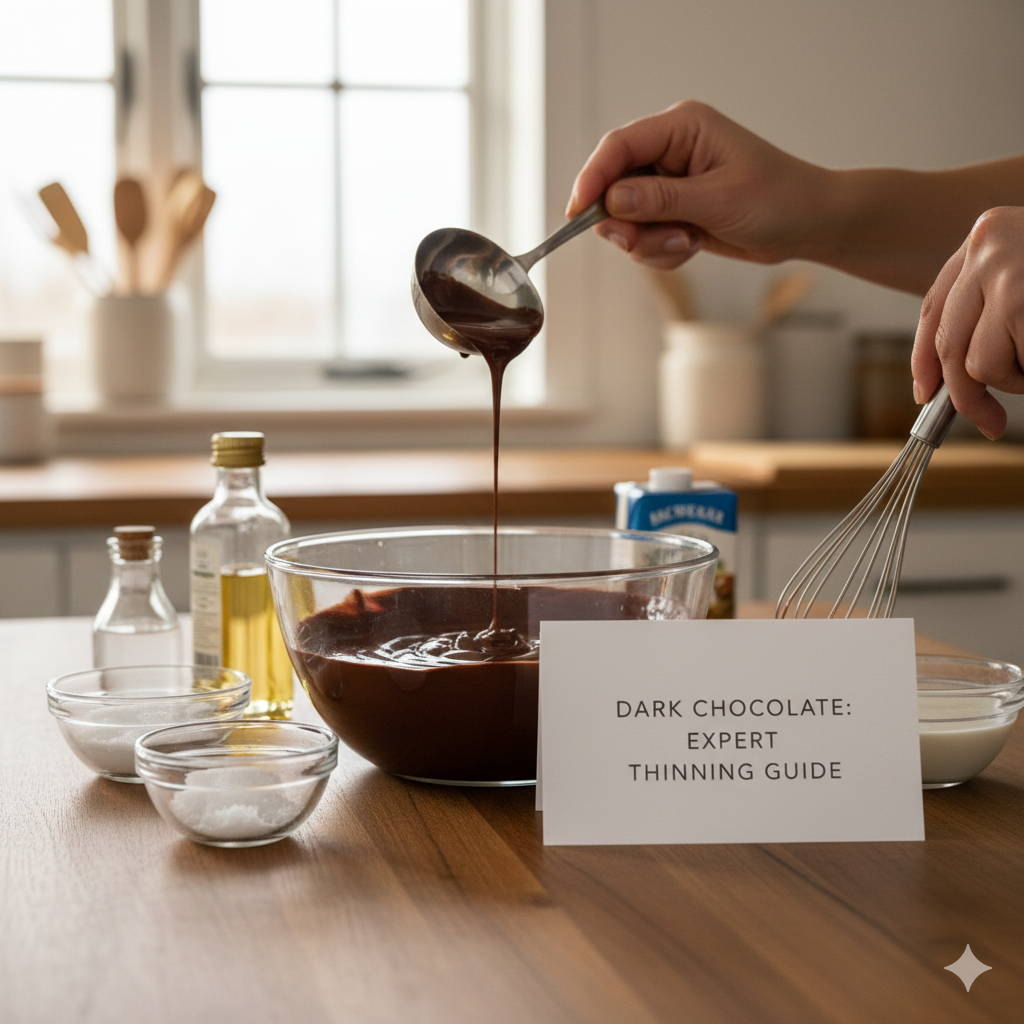
Add coconut oil at ratio of one tablespoon per cup of chocolate chips—approximately one teaspoon per three ounces. Start with half this amount, stirring thoroughly, then add more gradually until desired consistency achieved. The oil thins chocolate immediately upon mixing, allowing real-time viscosity adjustment. Quality chocolate products combined with appropriate coconut oil create professional-quality dipping chocolate.
Vegetable Oil and Shortening
Neutral vegetable oils like canola, grapeseed, or sunflower oil thin chocolate effectively at similar ratios to coconut oil. These oils remain liquid at room temperature, creating chocolate that stays fluid longer during dipping projects. However, the chocolate won't set as firmly as coconut oil-thinned varieties since vegetable oils don't solidify upon cooling.
Vegetable shortening provides alternative for people avoiding coconut products. Use same ratios as coconut oil—one tablespoon per cup of chocolate. Shortening creates stable consistency that sets firmly at room temperature while maintaining smooth texture. The semi-solid nature at room temperature means shortening must be melted before incorporating into chocolate for even distribution.
Cocoa Butter: Premium Professional Option
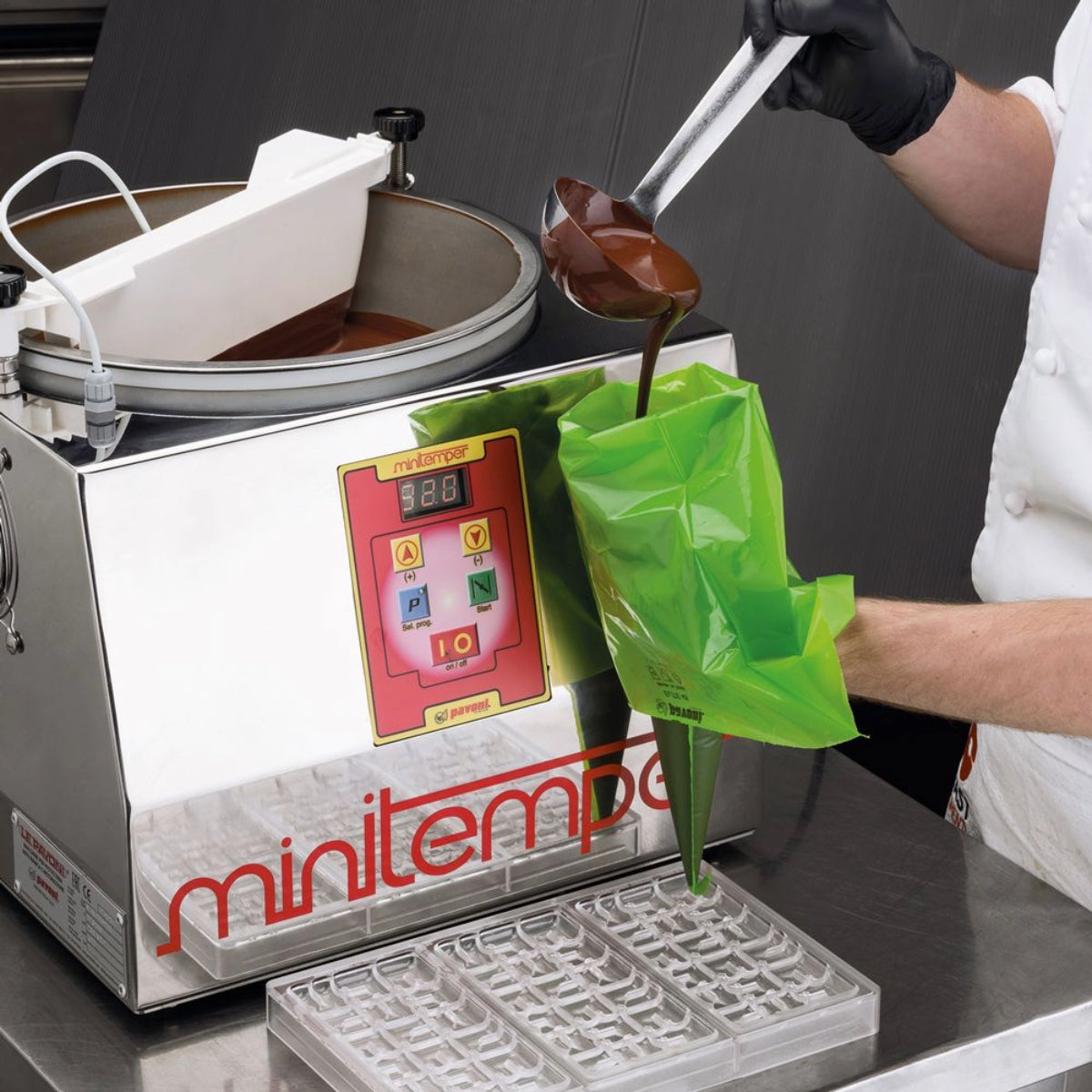
Food-grade cocoa butter represents the premium choice for thinning chocolate since it's chocolate's natural fat component. Adding cocoa butter maintains chocolate's pure composition without introducing foreign fats, making it ideal for candy making and professional confectionery work where ingredient integrity matters. Professional chocolate melters maintain optimal temperature for working with cocoa butter additions.
Cocoa butter costs significantly more than oils but delivers superior results—thinned chocolate maintains glossy finish, firm snap, and pure chocolate flavor identical to premium couverture chocolate. Use one to two tablespoons cocoa butter per cup of chocolate, melting the cocoa butter separately before incorporating into melted chocolate while stirring constantly.
|
Thinning Agent |
Ratio per Cup |
Flavor Impact |
Setting Firmness |
Cost |
Best For |
|
Coconut Oil (refined) |
1 tbsp |
None |
Firm |
Low |
General use, dipping |
|
Vegetable Oil |
1 tbsp |
None |
Soft |
Very Low |
Drizzling, sauces |
|
Vegetable Shortening |
1 tbsp |
None |
Firm |
Low |
Baking, coating |
|
Cocoa Butter |
1-2 tbsp |
None |
Very Firm |
High |
Professional work |
|
Butter |
1 tbsp |
Slight dairy |
Soft |
Moderate |
Ganache, sauces |
Step-by-Step Thinning Process
Proper technique ensures even thinning without introducing problems like graininess or separation. Following these steps produces consistently smooth, workable chocolate regardless of which thinning agent you choose.
Preparation Phase
Melt chocolate completely using preferred method—microwave, double boiler, or professional chocolate melter. Ensure chocolate reaches fully liquid state with no unmelted pieces remaining. Check temperature with digital thermometer to verify chocolate sits within optimal working range rather than being overheated.
Measure thinning agent carefully using measuring spoons rather than estimating by eye. Accuracy matters since too much oil makes chocolate greasy and prevents proper setting, while too little leaves chocolate thicker than desired. Start conservative with half the suggested amount—you can always add more but cannot remove excess once incorporated.
Incorporation Technique
Add thinning agent to melted chocolate in small increments rather than all at once. Pour measured amount into center of chocolate bowl and stir gently with flexible silicone spatula using circular motion from center outward. The gradual incorporation ensures even distribution without creating oil pockets that separate from chocolate.
Stir continuously for thirty to sixty seconds after each addition, observing how chocolate's consistency changes. The thinning effect appears immediately but continues developing as you stir and the ingredients fully integrate. Lift spatula above chocolate bowl and observe how chocolate flows off—ideal dipping consistency creates smooth ribbon that slowly disappears into the surface.
Test consistency by dipping a strawberry, pretzel, or spoon to evaluate coating thickness. If chocolate still seems too thick, add another half-teaspoon of oil, stir thoroughly, and test again. This incremental approach prevents over-thinning that creates chocolate too fluid to coat properly or that slides off dipped items entirely.

Thinning Chocolate for Specific Applications
Different chocolate applications require different viscosities, making a one-size-fits-all approach ineffective. Matching chocolate thickness to your intended use ensures optimal results whether dipping, drizzling, molding, or coating.
For Dipping Strawberries and Fruit
Strawberry dipping requires moderately thin chocolate that coats evenly without pooling excessively at the base. Add coconut oil at ratio of three-quarters tablespoon per cup of chocolate—slightly less than standard recommendations. This creates coating thick enough to cover fruit completely in single dip while thin enough to avoid heavy chocolate accumulation at the bottom.
The chocolate should flow smoothly off dipped strawberry within three to four seconds, leaving thin, even coating that reveals fruit color slightly through the chocolate. Too-thick chocolate takes longer to drip and creates heavy coating that overwhelms fruit flavor. Chocolate dipping techniques explain additional methods for achieving perfect fruit coatings.
For Drizzling and Decoration
Drizzling applications require thinner chocolate that flows easily from spoon, fork, or piping bag but still maintains enough body to create defined lines rather than spreading immediately. Add one full tablespoon coconut oil or vegetable oil per cup of chocolate for drizzle consistency.
Test by drizzling across parchment paper in zigzag pattern. The lines should hold their shape without running together while remaining smooth and glossy. Fill disposable piping bags for precise drizzle control over cakes, cookies, or previously dipped items needing decorative finishing.
For Molds and Coating
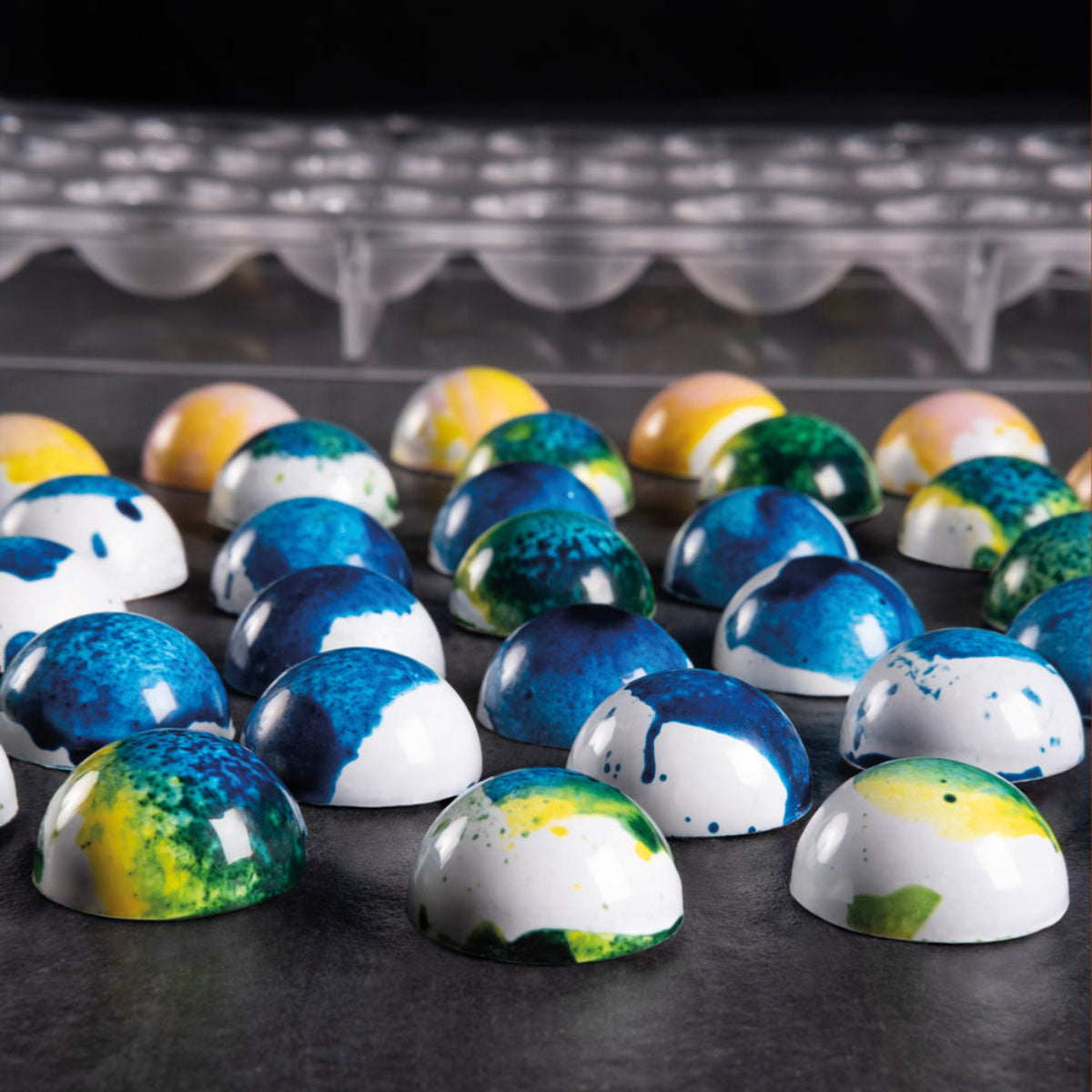
Chocolate for mold work requires different consistency than dipping chocolate. Too-thin chocolate fails to release cleanly from molds and may develop bloom, while too-thick chocolate traps air bubbles and creates uneven thickness. Use minimal thinning—just half tablespoon per cup—or choose couverture chocolate that requires no thinning.
Pour chocolate into molds slowly to minimize air incorporation. Tap molds firmly on work surface ten to fifteen times to release trapped bubbles, then scrape excess chocolate from surface using rigid scraper held at forty-five-degree angle. Proper consistency allows chocolate to settle evenly while air escapes before setting begins.
Common Mistakes When Thinning Chocolate
Even experienced chocolate workers encounter problems when thinning chocolate. Recognizing these common errors helps you avoid them or correct issues quickly when they occur during chocolate projects.
Adding Water-Based Liquids
The most critical mistake involves adding water-based liquids like milk, cream, or liqueurs directly to melted chocolate without other ingredients. Even small amounts of water cause immediate seizing that transforms smooth chocolate into thick, grainy paste. If recipe requires liquid additions, combine them with fat first—mix cream with butter before adding to chocolate, or ensure liqueurs are very high-proof spirits that won't trigger seizing.
Seized chocolate cannot be un-seized through simple thinning. Instead, add warm heavy cream one tablespoon at a time while stirring vigorously to transform seized chocolate into smooth ganache. While this salvages the chocolate, the resulting ganache has different properties than properly thinned chocolate and may not work for original intended application.
Over-Thinning Chocolate
Adding too much oil creates chocolate that never sets properly, remaining sticky and soft even after refrigeration. This over-thinned chocolate won't develop the snap and firm texture characteristic of quality chocolate and may leave greasy residue on fingers when touched. Prevention is key since removing excess oil is impossible once incorporated.
If you accidentally over-thin chocolate, add more melted chocolate to balance the oil ratio. Melt additional chocolate separately, then stir it into the too-thin mixture gradually until proper consistency returns. This solution requires having extra chocolate available but effectively corrects the mistake.
Incorrect Temperature During Thinning
Adding cold oil to hot chocolate or vice versa can cause temperature shock that affects final texture. Warm coconut oil or cocoa butter to lukewarm state before adding to melted chocolate for smooth integration. Similarly, don't add thinning agents to chocolate that's overheated above one hundred degrees Fahrenheit—allow chocolate to cool to proper working temperature first for best results.
Alternative Methods Without Added Fats
Some situations require thinning chocolate without adding oils or fats. These alternative approaches work when dietary restrictions prohibit added fats or when maintaining pure chocolate composition matters for recipe integrity.
Using Different Chocolate Types
Switch from standard chocolate chips to couverture chocolate that contains higher cocoa butter percentages. Premium couverture varieties melt into naturally thin, fluid consistency requiring no additions. While more expensive than chocolate chips, couverture delivers superior flavor and texture alongside optimal working properties.
Compound chocolate or candy melts offer another alternative since they're formulated to melt into thin, workable consistency without additions. These products use vegetable oils instead of cocoa butter, sacrificing some flavor complexity for convenience and ease of use. They work excellently for casual dipping projects where pure chocolate taste is less critical.
Temperature Adjustment Method
Sometimes chocolate appears thick simply because it's too cool rather than because it lacks fat. Gently rewarm chocolate using double boiler or short microwave bursts at reduced power until temperature reaches optimal working range. Test with thermometer rather than guessing since chocolate that looks melted may still be below ideal temperature where cocoa butter flows freely.
Maintain consistent temperature throughout your dipping or molding session using professional chocolate warming equipment that prevents cooling between uses. This eliminates repeated reheating that degrades chocolate quality while maintaining perfect working consistency throughout extended projects.
Understanding how to make melted chocolate thinner empowers you to transform standard chocolate chips into workable coating chocolate perfect for dipping, drizzling, and decorating. The most effective method adds refined coconut oil at ratio of one tablespoon per cup of chocolate, though vegetable oil, shortening, or premium cocoa butter work equally well depending on application and budget. Start with conservative amounts and add gradually while stirring thoroughly, testing consistency frequently until achieving desired fluidity. Different applications require different viscosities—strawberry dipping needs moderately thin chocolate while drizzling requires thinner consistency. Avoid water-based liquids that cause seizing and prevent over-thinning that creates chocolate unable to set properly. For premium chocolate products that melt beautifully, professional tools, and expert guidance on chocolate work, explore quality options at Zucchero Canada where excellence meets innovation in every chocolate creation.
References:
Beckett, S. T. (2023). The science of chocolate (3rd ed.). Royal Society of Chemistry.
Greweling, P. (2024). Chocolates and confections: Formula, theory, and technique (3rd ed.). John Wiley & Sons.
Minifie, B. W. (2023). Chocolate, cocoa, and confectionery: Science and technology (4th ed.). Springer.
Ziegler, G. R., & Hogg, R. (2024). Industrial chocolate manufacture and use (5th ed.). Wiley-Blackwell.







Leave a comment
All comments are moderated before being published.
This site is protected by hCaptcha and the hCaptcha Privacy Policy and Terms of Service apply.